Why Livestock Hydration Is the Missing Link in Weight Gain (And How Most Systems Get It Wrong)
The Problem Most Producers Don’t Realize
If your animals aren’t gaining weight the way they should, the issue might not be your feed program.
It might be your water.
Hydration is one of the most overlooked factors in livestock performance—and one of the easiest to fix. Yet many operations are unknowingly limiting weight gain because their watering systems don’t support how animals actually drink.
Water Intake Drives Feed Intake—Period
Livestock don’t just need water to survive; they need it to grow.
When water intake drops:
- Feed intake drops
- Digestion slows
- Nutrient absorption decreases
- Weight gain stalls
It’s a direct relationship. No water → no growth.
Even small disruptions in access or usability can quietly reduce daily gains over time.
The Hidden Issue: It’s Not Just Access. It’s Usability
Most producers will say, “My animals have water.”
But here’s the real question:
Can they drink easily, comfortably, and consistently?
This is where many watering systems fall short.
Common problems that reduce water intake:
- Drinkers placed too high or too low
- Systems that require too much effort to activate
- Inconsistent or slow water flow
- Competition at limited access points
If drinking becomes inconvenient, animals will simply drink less, and that shows up in their weight gains.
Cup Systems vs. Nipple Systems: What Actually Encourages Intake
Not all watering methods support natural drinking behavior equally.
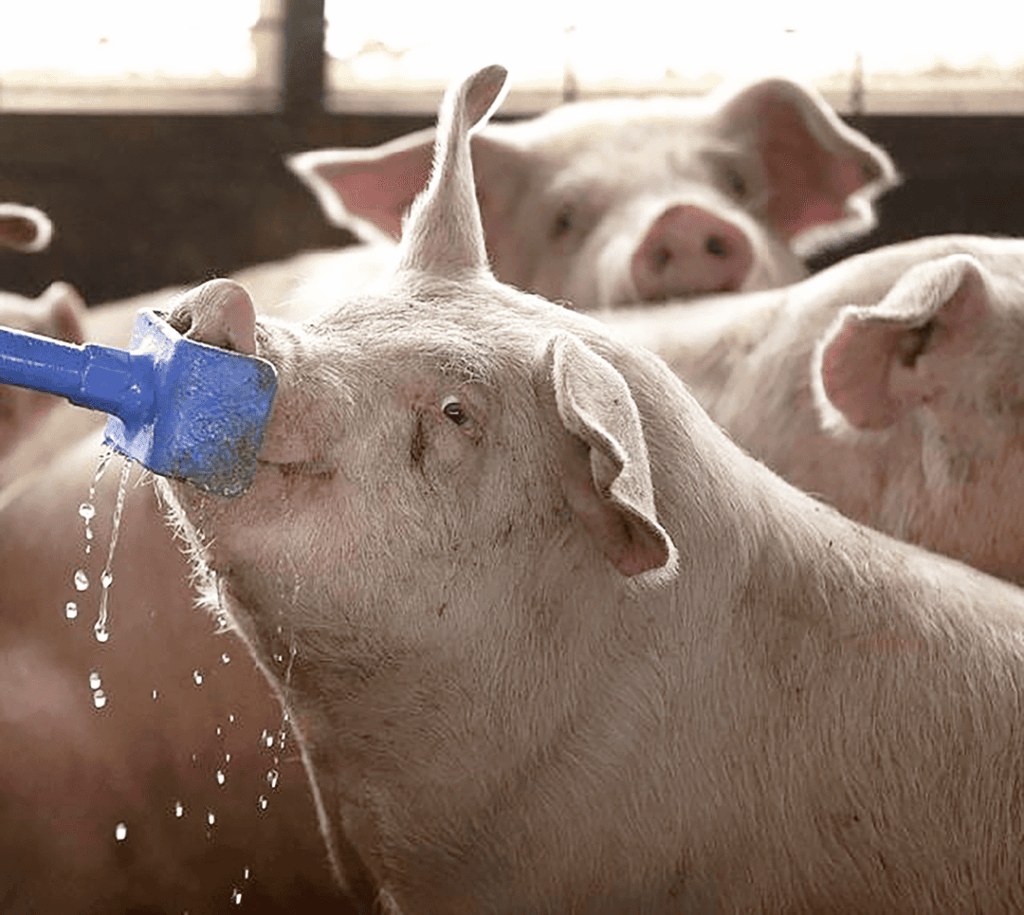
Nipple Systems
- Deliver water directly when triggered
- Can work well in some setups
- But often require precise positioning
- Animals may stop drinking once water hits their nose or face
Cup Waterers
- Allow animals to trigger water flow, then drink from a reservoir
- More closely mimic natural drinking behavior
- Reduce frustration and repeated triggering
- Encourage longer, more complete drinking sessions
In many cases, animals using cup systems consume water more consistently, especially when they can control the flow and drink at their own pace.
Why This Matters for Weight Gain
Better hydration leads to:
- Higher feed intake
- Improved feed conversion efficiency
- More consistent daily gains
- Less stress during temperature swings
When animals drink more naturally, everything downstream improves.
Water Quality Still Matters
Even with the right system, poor water quality will hold you back.
Make sure your water is:
- Clean and free of buildup
- Palatable (not overly high in minerals)
- Fresh and at a reasonable temperature
If animals don’t like the water, they won’t drink enough, no matter how good the system is.
Heat Stress Makes Hydration Even More Critical
In warmer conditions, water demand increases dramatically.
At the same time:
- Feed intake often drops
- Stress levels rise
- Performance becomes more fragile
This is when watering system efficiency really shows up. If animals struggle to access water during heat, weight gain losses compound quickly.
Simple Changes That Can Improve Gains
You don’t always need a full system overhaul to see improvement.
Start with:
- Adjusting drinker height to match animal size
- Ensuring easy activation (especially for younger animals)
- Checking flow rate and refill speed
- Adding additional watering points to reduce competition
Small changes can lead to measurable differences in performance.
The Bottom Line
Water isn’t just a requirement; it’s a performance tool.
If livestock hydration isn’t optimized, weight gain never will be.
Before changing feed, genetics, or supplements, it’s worth asking:
Are your animals actually drinking as much as they should?
Latest Posts
- How High Should a Pig Water Nipple Be? The Complete Installation Guide
- CSA Approved Stock Tank Heater for Canadian Winter Livestock Watering
- How to Clean and Maintain a Livestock Pen Waterer (Complete Care Guide)
- Common Waterer Installation Mistakes Farmers Make (and How to Avoid Them)
- Why Livestock Hydration Is the Missing Link in Weight Gain (And How Most Systems Get It Wrong)